- Michael in Asia
- Posts
- Becoming Taiwanese – the full breakdown 🇹🇼
Becoming Taiwanese – the full breakdown 🇹🇼
The steps after getting your NWOHR passport

Michael Wu
March 27, 2026
I recently got my full Taiwanese citizenship, which is a goal I’ve been working on for a while. I’m feeling a lot of national pride for taking this next step in discovering my roots! I already acquired a Taiwanese Passport a few years back in preparation for this, but was waiting for right timing for the rest of the process. The full details are in this article.
Table of Contents
Japanese immigration and tourist visa fees set for increases 🇯🇵

Japan is moving to sharply increase immigration-related fees, with a bill approved on March 10, 2026 that raises costs by 10–20x in some cases.
The biggest change is for permanent residency applications. Application fees are set to jump from ¥10,000 to ~¥200,000. Visa status changes and renewal fees are also increasing significantly (from ¥6,000 to ~¥70,000).
One important thing is unknown: how this applies to applications already in progress. This applies mostly to permanent residency, where processing can take 6–12+ months, and you pay the fee when you are approved, not when you apply. There is a real question of whether you pay based on when you apply or when you are approved. Previously, if you applied before a fee change took effect, you would still pay based on the scheme when you applied. Until this clarified, assume some risk of being charged the higher fee on approval.
Separately, Japan is introducing JESTA (Japan Electronic System for Travel Authorization, 日本版ESTA, Nihon-ban ESTA), a pre-arrival screening system for visa-exempt travelers, targeted for 2028. In practice, this functions as a tourist fee layer on top of existing entry.
The broader direction is clear: Japan is shifting toward a “user pays” immigration system, with fees moving closer to other developed markets.
Germans can become Taiwanese dual citizens? 🇩🇪🇹🇼

Normally getting Taiwanese citizenship without going through the heritage route means you need to relinquish your other citizenship(s) first. However, there are limited exceptions such as if your original citizenship country makes it illegal to relinquish your citizenship. I learned from a friend, but apparently since Germany made it illegal to reliquish your citizenship without first acquiring full citizenship and permanent residence of another country (in order prevent becoming stateless), Germans can now gain full Taiwanese citizenship without relinquishing German citizenship. This case may lead to other exceptions, so keep your eyes open!
🇹🇼 Tips for Getting Taiwanese Citizenship as an NWOHR
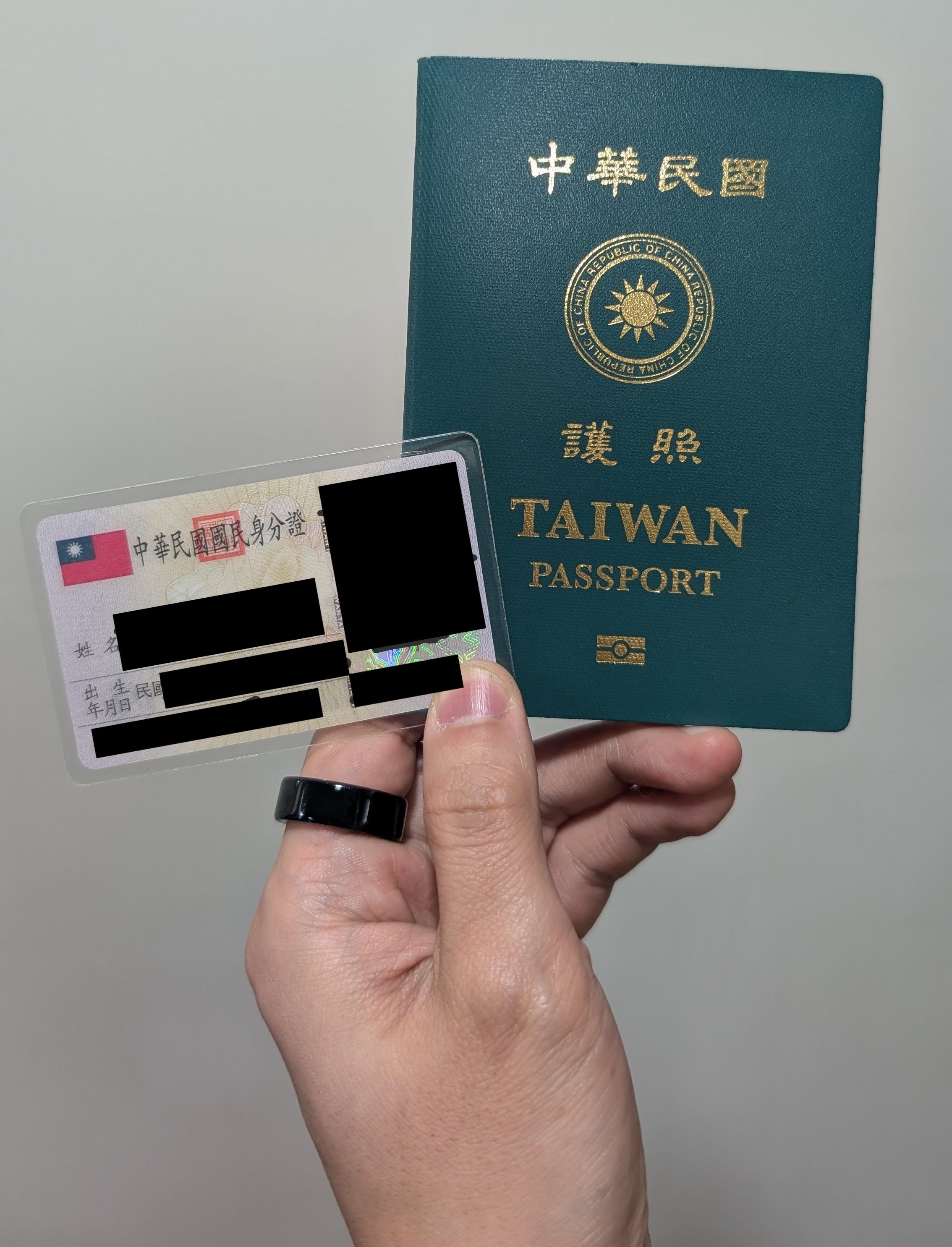
My Taiwanese ID and Passport!
Taiwanese citizenship is a little unusual. Unlike many countries, it’s not just about nationality; it’s tied to household registration (戶籍, hùjí). You can be a national of Taiwan and even hold a Taiwanese passport, but without household registration you don’t have full rights. No National ID number, no voting, limited access to things like banking, health insurance, or long-term residency. This status is officially called NWOHR (National Without Household Registration, 無戶籍國民, wúhùjí guómín).
Getting “full citizenship” in Taiwan, in practice, means obtaining household registration. If you’re just beginning to research this, the best high-level overview is this article from Talent Taiwan:
One important note up front: this is one of the rare cases where obtaining full Taiwanese citizenship does not require giving up your other citizenship. You were already a Taiwanese national by birth — this process is about activating household registration, not naturalizing as a foreigner.
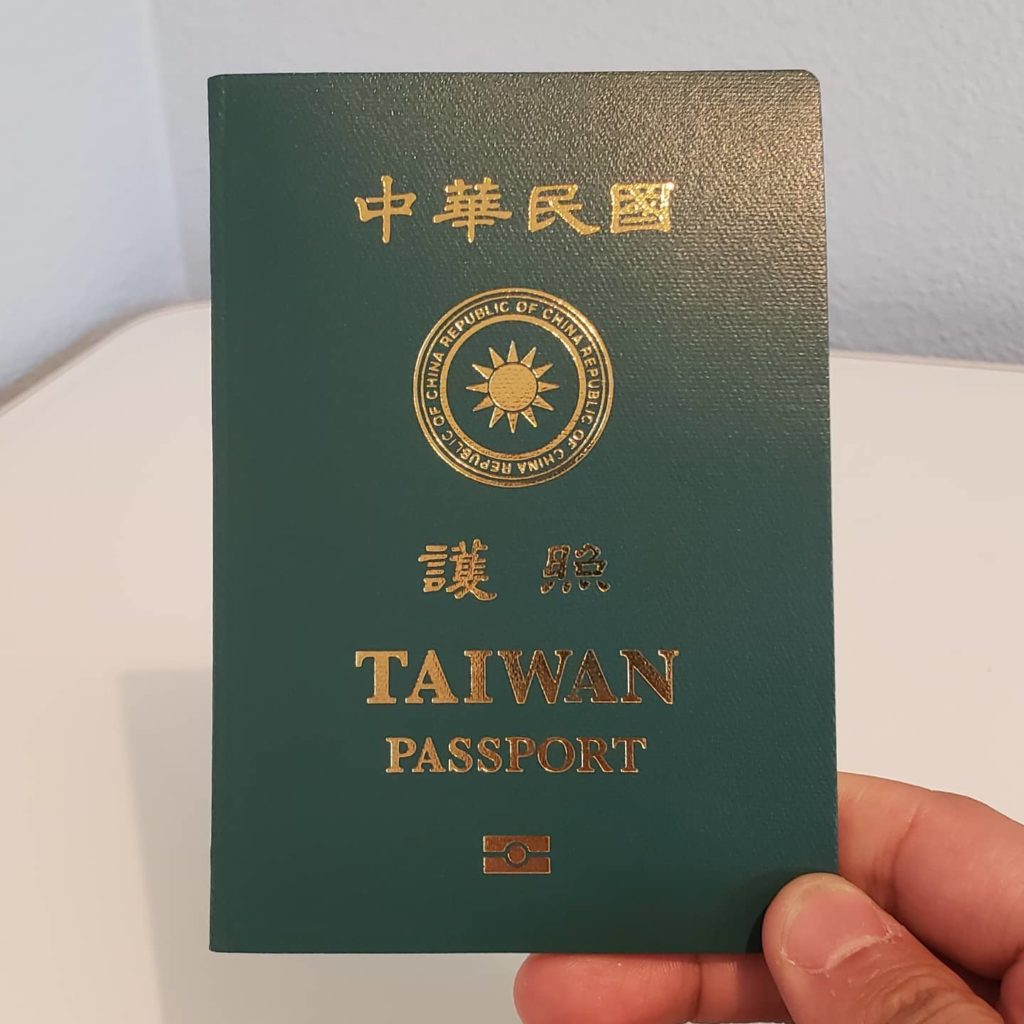
Step 0: Getting the NWOHR Passport
Before anything else, you need an NWOHR passport. I won’t repeat that process here, since I already wrote about it in detail:
Resources
You can read the official NIA (National Immigration Agency, 內政部移民署, Nèizhèngbù Yímín Shǔ) guidelines directly in English and Chinese.
These documents explain the legal basis and required documents — but they leave a lot of practical questions unanswered.
There are also several excellent first-hand accounts online:
“My experience getting Taiwanese full citizenship”
https://www.reddit.com/r/taiwan/comments/1i8vgxf/my_experience_getting_taiwanese_full_citizenship/
This Instagram Post
This YouTube video
That said, I found that the official guidelines and the Talent Taiwan article don’t always line up with real-world execution. This is partly because the rules allow discretion, and partly because some cases simply aren’t spelled out clearly. In this post I will:
Share what actually happened when I went through the process
Highlight common points of confusion
If you’re an expat, overseas Taiwanese, or someone who grew up between countries like I did, I hope this saves you time (and a few unnecessary trips to government offices).
Addendum: Residency Requirement Changes (Effective 2024)
One of the biggest recent changes — and the reason this process is now practical for many people — is the removal of the one-year continuous residency requirement for certain Nationals Without Household Registration (NWOHRs).
As of January 1, 2024, NWOHRs who were born to at least one parent with active household registration in Taiwan at the time of their birth no longer need to live in Taiwan for a minimum period before applying for household registration.
(This applies even if you were born overseas or your parent later lived abroad. Household registration can be administratively suspended after long absences, but that does not mean loss of nationality and generally does not affect whether a parent qualified at the time of your birth.)
In other words, if you fall into this category, you can now enter Taiwan and begin the settlement and household registration process immediately, without first completing a 365-day (or 335-day) residency requirement.
Continuous stay requirement removed: The old rule requiring roughly one year of continuous residence no longer applies to eligible applicants.
Direct path to household registration: After obtaining the settlement permit from the National Immigration Agency, you can proceed directly to household registration.
No age limit: The former age cap (previously around 20) for applying under this pathway has been removed.
If you do not meet the parental household-registration criteria, then the older residency requirements still apply.
Addendum: Military Service
If you are a military-aged male, activating household registration may make you subject to military service obligations. Being of military age means from January 1 of the year you turn 19 through December 31 of the year you turn 36. In some cases, activating household registration can make you subject to Taiwan’s conscription rules.
The details have become more complicated after recent rule changes, and the outcome depends heavily on your exact status, and travel history. I wrote separately about those changes, so read that before taking any irreversible step.
My view is: Taiwan should have a functioning military, but that does not create any personal moral obligation to get yourself conscripted when you do not otherwise need to. In practice, many more educated returnees may be assigned to alternative service or administrative/office-type roles rather than front-line military work, but it is still a substantial time cost and, for many people, not a good use of it.
It is possible to live in Taiwan without activating household registration (for example, on a TARC (Taiwan Area Resident Certificate, 台灣地區居留證, Táiwān Dìqū jūliú zhèng)), which does not trigger the same obligations. If this is relevant to you, review the details carefully before proceeding.

Police Clearance Certificate (FBI for the U.S.)
One requirement for getting residence rights is a police clearance certificate (全國性警察刑事紀錄證明書, quánguó xìng jǐngchá xíngshì jìlù zhèngmíng shū), typically from your country of nationality.
There are a few exceptions. Minors are usually exempt, and there is also a more obscure carve-out for people who have already been residing in Taiwan as NWOHR (National Without Household Registration, 無戶籍國民, wú hùjí guómín) and are essentially continuing that status.
For everyone else, a police certificate is required, and the default is that it comes from your country of nationality. Unless you have a very clear alternative (e.g. long-term permanent residence elsewhere), authorities will typically insist on your home country certificate. The reason for the certificate is that residence can be denied on “moral character” grounds, even if you are already a national.
The Talent Taiwan article states that if your police clearance certificate is not in Chinese, it must be translated, notarized, and verified by an ROC overseas mission. This is a safe interpretation, but it overstates what is actually required.
Under the official NIA 0306 Guidelines, overseas documents must be authenticated by an overseas mission. However, translations are only required if NIA requests them, and notarization of translations is discretionary, not automatic.
In practice, TECRO Washington, DC (駐美國台北經濟文化代表處, Zhù Měiguó Táiběi Jīngjì Wénhuà Dàibiǎochù) will authenticate the original English FBI Identity History Summary directly, without requiring a Chinese translation at that stage. This is fully compliant with the regulations. Translation, if requested later by NIA, does not need to be notarized. Self-translations or Google Translate printouts are widely accepted, as long as they are accurate and the English original has already been authenticated.
I’m only familiar with the process in the US, so I have no comments on the process for other countries. It cost $18 for the FBI Identity History Summary request + $50 to get fingerprinted at USPS, which I could do immediately after paying online. It took a day for the report to be available. Later, I mailed an application to TECRO Washington, DC with a money order enclosed, and received the authenticated copy back in 7 business days with express service.
You can see instructions for getting your FBI Identity History Summary authenticated at the TECRO website.
You can also read a FAQ on the process on the FBI website:
One practical note: I had trouble emailing [email protected] — my messages were never answered. After TECRO received my mailed application, an officer called me directly and asked me to forward the FBI email and PIN to her personal TECRO email address instead. The takeaway is that mailing the application works even if email communication doesn’t, and follow-ups may happen by phone.
Translation and Notarization: What’s Actually Required
The Talent Taiwan article says that foreign-language documents must be translated and notarized. This is a conservative summary, but the official guidelines are more flexible.
What the NIA guidelines actually require is authentication of the foreign original document. The NIA guidelines state that translated versions may be requested and that translations may need to be verified or notarized. The key word is may. In practice, notarization is rarely requested for standard documents like U.S. birth certificates or FBI background checks after they have already been authenticated by a TECO.
In practice, translations done by the applicant — including Google Translate printouts — are commonly accepted. Accuracy matters far more than formality. One important detail is to replace Google’s phonetic transliteration of names with official Chinese names that match household registration records.
This explains why applicants report wildly different experiences: the regulation allows officer discretion, and standardized documents are often processed without extra formality.
Health Examination and Which Passport to Use
The Talent Taiwan article correctly states that the health examination can be done in Taiwan or abroad, and that overseas exams must be verified by an overseas mission. What it does not clearly address is which passport you should use on the health check form.
The form used is 居留或定居健康檢查項目表, and hospitals are inconsistent. In my case, the hospital insisted on using my foreign passport, even though I brought both my foreign passport and my NWOHR passport. Later, the NIA officer told me that the NWOHR passport would have been preferable, but because I brought both passports, the health check was accepted without issue.
The practical takeaway is simple: use whichever passport the hospital insists on, and bring both passports to NIA. This avoids delays.
A Critical Terminology Trap: TAPRC vs 定居證 (dìngjū zhèng, Settlement Permit)
Some English-language guides—including the Talent Taiwan article—incorrectly say that you apply for a TAPRC. That is wrong for people pursuing household registration through the NWOHR pathway.
If you say you are applying for a TAPRC, staff may assume you are a foreigner applying for permanent residency and naturalization. That can lead to incorrect advice such as being told you must renounce Taiwanese citizenship.
That is not what NWOHR applicants are doing.
You are already a national of the Republic of China without household registration:
中華民國國民(無戶籍) (Zhōnghuá Mínguó guómín (wú hùjí), “ROC national without household registration”). The document you actually apply for is: 定居證 (dìngjū zhèng, Settlement Certificate)
This certificate exists for one purpose: to enable your first household registration. You are not naturalizing and you are not giving up any citizenship. A simple English description that tends to work well with immigration officers is: “Settlement Certificate for Household Registration.”
When speaking Chinese at the National Immigration Agency, it helps to be explicit about this distinction:
我是中華民國國民(無戶籍),申請定居證,目的是辦理戶籍登記。(不是外國人定居)
(Wǒ shì Zhōnghuá Mínguó guómín (wú hùjí), shēnqǐng dìngjū zhèng, mùdì shì bànlǐ hùjí dēngjì. (Bù shì wàiguórén dìngjū))
“I am an ROC national without household registration applying for a Settlement Certificate in order to complete household registration. I am not a foreigner applying for settlement.”
Proof of Parents’ Marriage
The Talent Taiwan article lists several ways to prove parents’ marriage, including household registration transcripts or translated and authenticated marriage certificates.
The official NIA guidelines clarify that if the parents were married in Taiwan, their original Taiwan National IDs are sufficient. The IDs already show marital status, so there is no need for a household registration transcript, and no need for a translated or authenticated marriage certificate.
Parents do not need to be present, but original IDs (not copies) are expected.
Leaving Taiwan While the 定居證 Is Processing
One of the most anxiety-inducing questions in this process is whether you are “stuck” in Taiwan once you start the settlement permit (定居證, dìngjū zhèng) application. Online answers are inconsistent, and the written regulations don’t clearly spell this out.
In practice, this is where written rules and on-the-ground enforcement diverge.
Although the published NIA guidelines do not explicitly state that you are prohibited from leaving Taiwan after submitting a 定居證 application, I was explicitly told by the NIA officer handling my case that once I started the process, I should not leave Taiwan until I completed household registration and obtained my new NWHR passport.
This was not casual advice. I was asked to sign a statement of understanding acknowledging this condition. Even though the NIA does not physically take your NWOHR passport when you apply (they only inspect and copy it), the officer was clear that leaving Taiwan mid-process would not be allowed in practice.
This is important: while some people report being able to leave Taiwan after submitting their application, your actual ability to do so depends on the specific NIA office and officer handling your case. Once you sign the acknowledgment, you are effectively committing to staying in Taiwan through household registration and passport issuance.
The restriction that is consistently enforced comes after household registration. Once you complete 戶籍登記 (hùjí dēngjì, household registration) and receive a National ID number, your first departure must be on a new NWHR passport, and you should not leave Taiwan until that passport is issued. This part is clear and well understood.
The takeaway is that the common online phrasing — “you can’t leave once you start 定居證” — is an oversimplification, but it is not wrong in practice. Even if the written rules don’t spell it out, NIA may impose this restriction as a condition of your application, and you should plan your travel accordingly.
If you need to leave Taiwan during this period, confirm this explicitly with the NIA officer at submission time, and be prepared for the answer to be “no.”
Household Registration
After you have the settlement permit (定居證, dìngjū zhèng), you can then proceed to the household registration office (戶政事務所, hùzhèng shìwùsuǒ) in the district you want to register in for that process and to get your National ID.
Where to register your household (parents vs. other relatives)
Registering under a parent’s household is by far the easiest path, if it’s available to you. If your parent has active household registration in Taiwan, the household registration office can directly link you through existing records. You generally do not need to separately prove the parent–child relationship beyond the documents already submitted earlier (birth certificate, parents’ marriage record), since this information already exists in the household registration system.
That said, registering under another relative (such as an uncle or aunt) is also possible and fairly common.
That said, household registration doesn’t actually require a family relationship. You can register under a friend’s or landlord’s address, for example. The key requirement is that the household head consents to you registering at their address. If you are unrelated, they simply rely on the household head’s consent rather than verifying any family link.
Registering under an uncle’s household (what I was asked for)
In my case, I registered under my uncle’s household, and there were a couple of extra procedural steps that weren’t clearly described in any official guide.
At NIA, I was asked to:
Provide a signed consent form from my uncle agreeing to let me register under his household
Bring my uncle’s original National ID (身分證正本, shēnfèn zhèng zhèngběn) and household registration transcript (戶籍謄本, hùjí téngběn) for verification
They did not ask for separate documentary proof of the uncle–nephew relationship (e.g. household transcripts linking my mother to him) at the NIA. The relationship could already be traced internally through existing household records.
This appears to be a practical, office-level safeguard rather than a hard legal requirement, but it’s something to be prepared for if you’re not registering under a parent.
At the household registration office, since I was registering under my uncle’s household, the officer needed to confirm the family relationship in the system. They were able to look this up directly in the household registration database, so I didn’t need to bring printed records showing the connection.
However at the household registration office they did ask to see my parents’ Taiwanese marriage certificate (結婚證明書, jiéhūn zhèngmíng shū), even though both of my parents’ National IDs already showed each other as spouses. I had only brought their IDs and not a household registration transcript (戶籍謄本), so the marriage certificate helped them confirm the family link.
During the process the officer also asked a few general background questions — things like how many siblings I have, whether I’m the oldest child, and my educational history. Apparently this goes in the household registration application.
Overall this step wasn’t difficult, but it’s a good reminder that the officers may ask extra
Forming a New Household vs. Registering Under a Relative
It’s possible to form your own household, but in that case you are responsible for handling any administrative matters yourself. If you register under an existing household, the household head can help with certain processes when needed.
The officer initially assumed I would be registering under my uncle’s household, and when I asked about alternatives, she explained that creating a separate household was also possible but would mean managing everything independently. Thus, I chose to go under my uncle in the end.
Household registration: relative presence may be requested
Another small but important surprise: when applying for my household registration, I was told to bring my uncle in person.
This is not always mentioned in guides, and it may vary by office or by how your household registration was established, but in my case they wanted:
The household head present in person
Their original National ID
If you registered under a parent, this may be less likely to come up. If you registered under a different relative, it’s a good idea to plan for them to accompany you, at least on the day you apply for household registration, to avoid delays.
Household registration: verification call
At the household registration office (戶政事務所, hùzhèng shìwùsuǒ), they asked for a suitable time to call or visit to verify details. In most cases this is just a phone call rather than an in-person check. In our case, we received a short call to confirm basic information.
Enrolling into National Health Insurance (NHI, 全民健康保險, quánmín jiànkāng bǎoxiǎn) 🏥
We also received information at the household registration office (戶政事務所, hùzhèng shìwùsuǒ) about enrolling in National Health Insurance (NHI, 全民健康保險, quánmín jiànkāng bǎoxiǎn). Enrollment happens after 6 months of residence with a new household registration if you are not employed in Taiwan. If you are employed in Taiwan, you can enroll immediately through your employer. These are the same rules that apply if you are living in Taiwan under an ARC (Alien Resident Card, 居留證, Jūliú Zhèng).
One important nuance: the 6 months of residence needs to be continuous. There is an allowed one time gap of maximum 30 days. If you leave before reaching 6 continuous months, the clock resets.
In practice, this means fragmented stays can delay NHI indefinitely — even if your total time in Taiwan exceeds 6 months. I will go into more details in a followup article.
The in office application process and timing (how long it took)
The official NIA guidelines say the 定居證 (dìngjū zhèng, settlement permit) processing time is 7 business days, and that turned out to be accurate in my case.
With all papers in hand, I got in queue at the NIA; the line is very short in the morning, and grows in the afternoon. The officer took all the documents for inspection, took copies of the important ones, and returned my passports, health certificate, background check, my uncle’s household registration transcript and ID and my parents National IDs. In return, I was given a paper with my application number and a site where you can check the status of your application online. This lets you see when the case is ready before making a trip back to the office. When the status moves to 製證中 (zhìzhèng zhōng, document ready for issue) then you can go pick it up. I submitted my application at the NIA on a Friday, and the certificate was ready seven business days later on Monday of the following week.
When I returned to pick up the 定居證 (dìngjū zhèng, settlement permit), the process was extremely quick — you don’t need to take a queue number. Just go directly to the designated counter and they will retrieve it for you.
Once you have the 定居證 (dìngjū zhèng, settlement permit), you are required to complete 戶籍登記 (hùjí dēngjì, household registration) within 30 days. If you do not complete registration within the 30-day window, you may need to reapply or have your status re-evaluated, so this is not something to delay. I was on a timeline, so I immediately went to the household registration office to complete my the process. There was some waiting involved (mostly normal government office queue time), but the process itself was straightforward and I was issued my National ID card (身分證, shēnfèn zhèng) the same day.
After that, I headed to BOCA (Bureau of Consular Affairs, 外交部領事事務局, Wàijiāobù Lǐngshì Shìwù Jú) to apply for the new passport. The lines that afternoon were extremely long, so I decided to come back the next morning instead. I submitted my passport application first thing in the morning and chose the expedited service. You can use the exact same pictures as the ones for the 定居證 (dìngjū zhèng, settlement permit) if you want to save some effort and money. The new passport was ready the next day at 10:00 AM. You submit your old passport as part of the application, and it is returned at pickup with a clipped corner to invalidate it.
Overall, once the 定居證 (dìngjū zhèng, settlement permit) is issued, the remaining steps — household registration, National ID issuance, and passport application — can all move very quickly if you time your visits well. It helps that the offices are all fairly close to each other in Taipei!
Conclusions
Hopefully this helps others on their pathway to Taiwanese citizenship! I’m feeling quite proud of this step I’ve taken. For comments and questions, you can always reach out at [email protected]! Remember, you can also support this publication by becoming a paid subscriber or a Patreon!
Reply